Papers by David Eqbal
Papers and policy proposals on how legitimate power is designed, who authors the built environment, housing a generation priced out, and decisions that should be made in public. Each one is free to read. Students and researchers are invited to take up the open thesis ideas through the OSF projects linked beside the papers.
These papers are the result of years of thinking and research, now being organized and published. They are free to read and open to challenge.
See all papers and new releases on SSRN·Watch the papers explained on YouTube
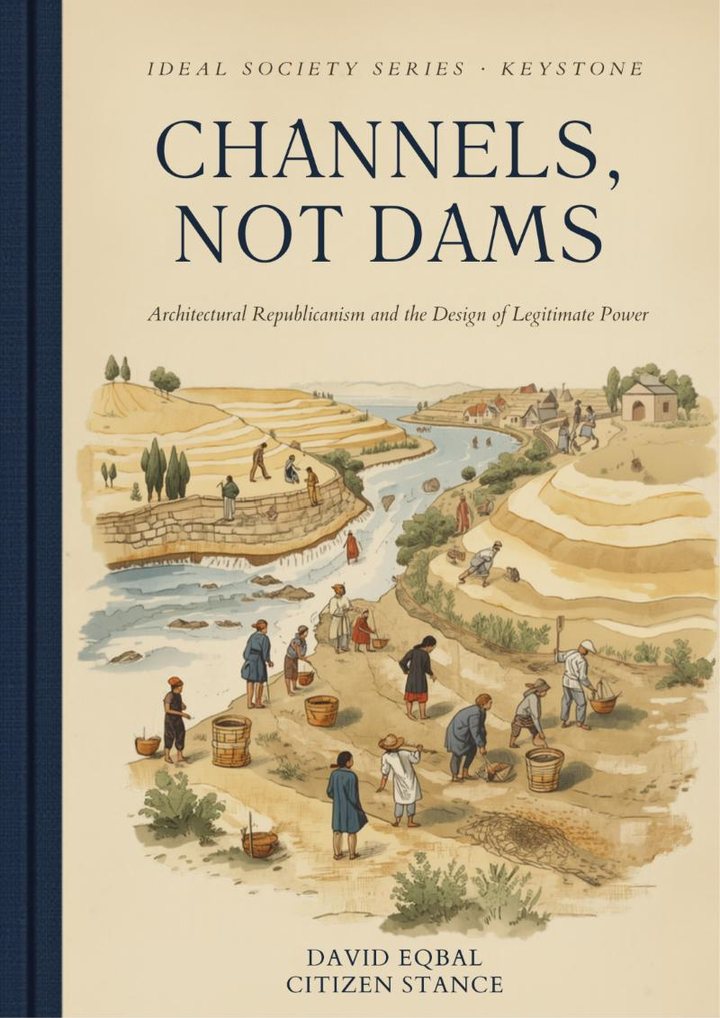
Channels, Not Dams
Architectural Republicanism and the Design of Legitimate Power
Legitimate power is designed, not trusted. It channels self-interest rather than denying it, rests on a floor that no decision may cross, and binds people only through structures they can verifiably recognize as their own.
The keystone of the Ideal Society Series, in five theses: channels, not dams; the floor; verified self-authorship; the four checks; and the enabler. The four checks are independent evaluation, transparency, a channel to flag harm, and monitoring from below. The Built Environment Series applies them to the built world.
Read the summary in plain words →Ideal Society Series
A framework for the future of mankind, built paper by paper.
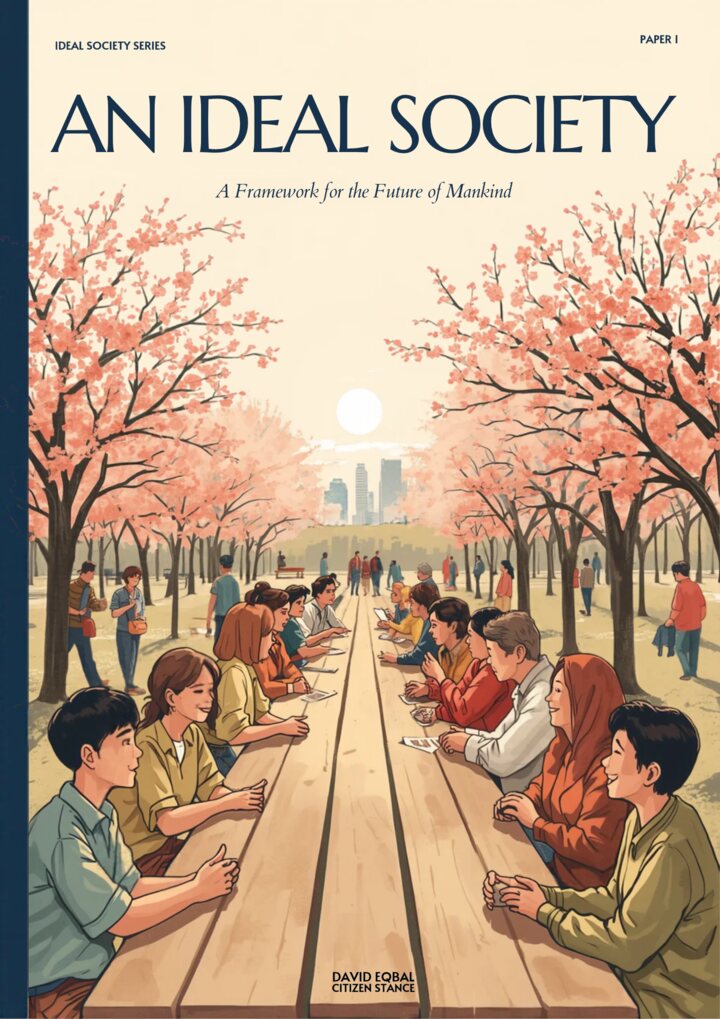
An Ideal Society
A Framework for the Future of Mankind
History's recurring failures (power concentrating, opportunity narrowing, dignity eroding) are failures of design, not of human nature. Drawing on architecture, the paper proposes four pillars: channeling power and gain, equality of opportunity, equality of dignity, and civilizational liberty, expressed through governance, the economy, education and civic culture.
Read the summary in plain words →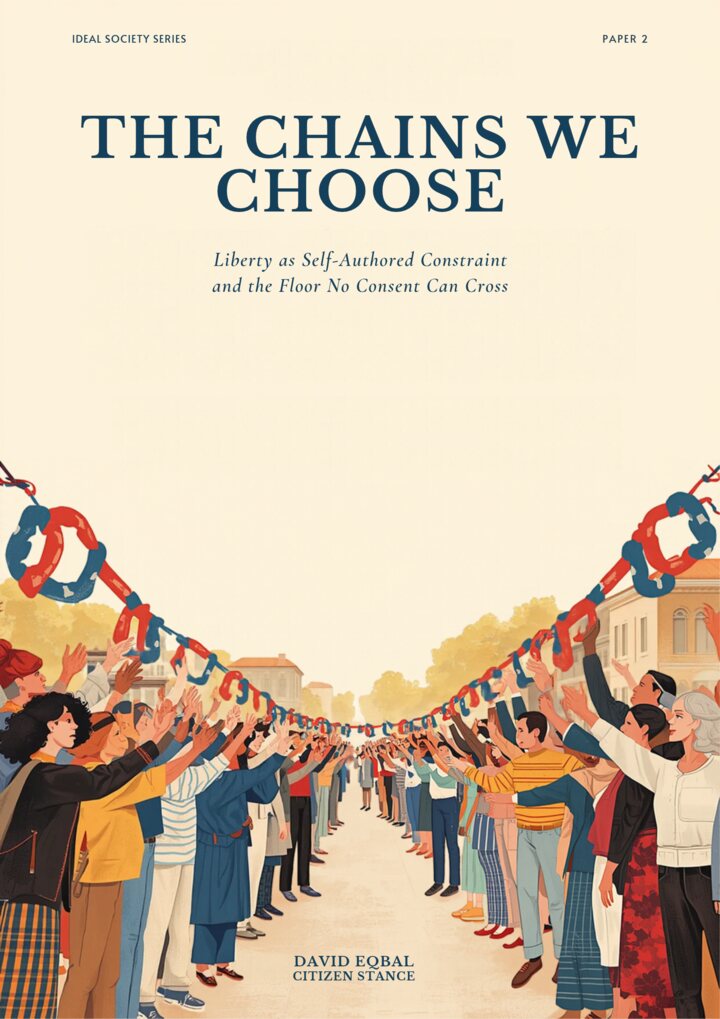
The Chains We Choose
Liberty as Self-Authored Constraint and the Floor No Consent Can Cross
Every law limits us in some way. The paper asks when a limit is fair and when it is simply done to us. Its answer: a rule is fair when the people it binds truly helped make it and can check that they did. Even then, some things no vote may ever do to a person: that is the floor no consent can cross.
Read the summary in plain words →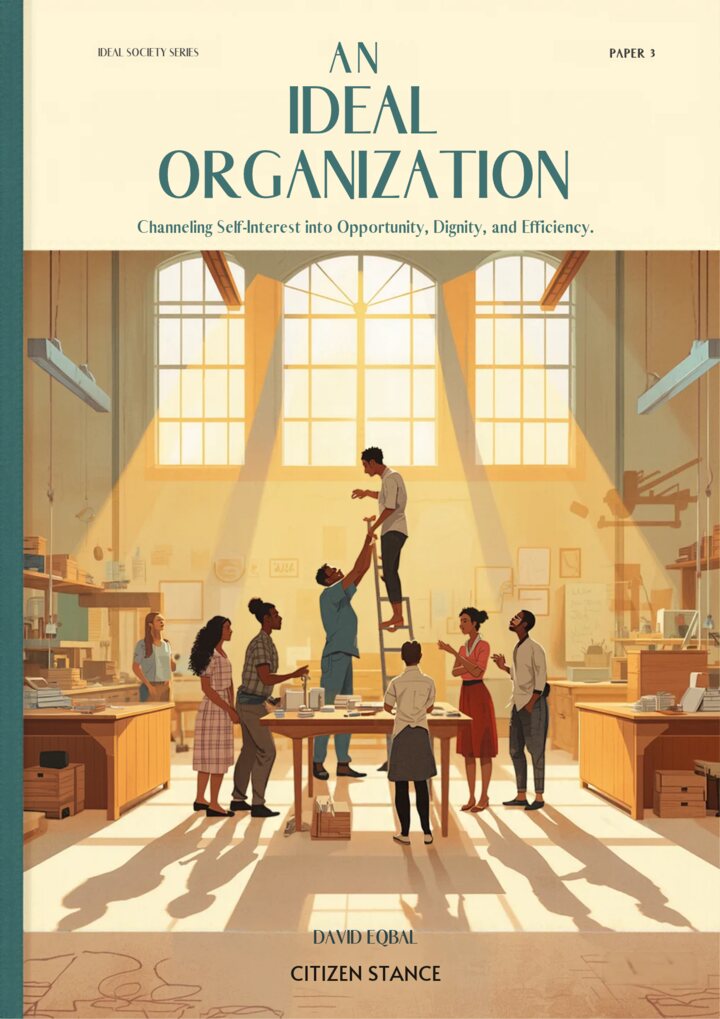
An Ideal Organization
Channeling Self-Interest into Opportunity, Dignity, and Efficiency
A fair organization channels the drive for gain, status and power instead of suppressing it. The paper reviews five alternatives to the shareholder-first firm, from cooperatives to steward ownership, and finds that each misses how people are placed into roles. It proposes placement by demonstrated ability, tested against Bridgewater, Google, Netflix and Valve.
Read the summary in plain words →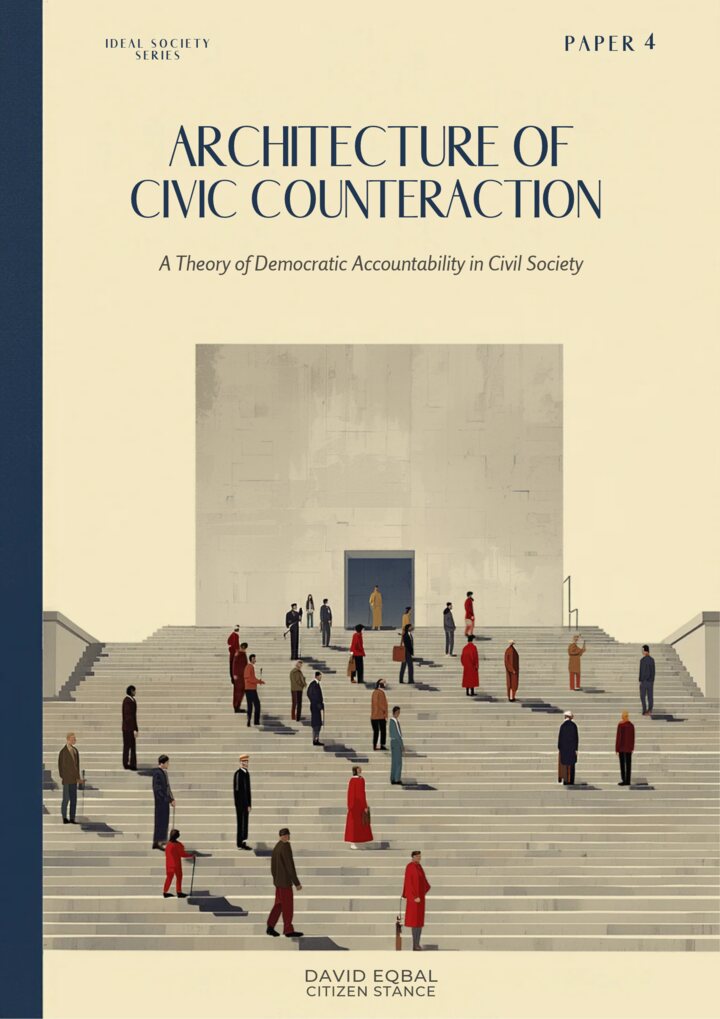
The Architecture of Civic Counteraction
A Theory of Democratic Accountability in Civil Society
Between elections, citizens have no continuous way to evaluate the public servants who hold power over their daily lives; ombudsmen are hard to reach and journalism is episodic. The paper names this gap as a structural flaw, traces its causes, and proposes a design response: a persistent, public record of how public servants perform, built by citizens.
Read the summary in plain words →Built Environment Series
How the places we build shape the choices we can make.
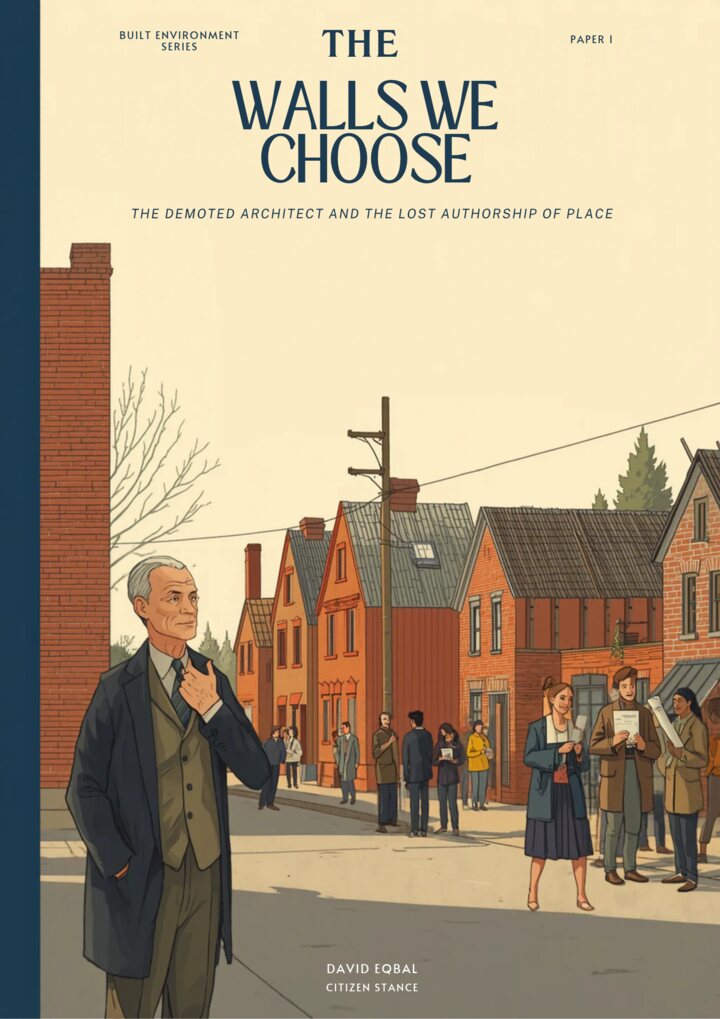
The Walls We Choose
The Demoted Architect and the Lost Authorship of Place
The architect has been demoted from author of a building to someone left only with compliance, caught between the financial model and the regulator. Following a composite building from concept to construction, and drawing on Marx's account of alienation, the paper shows that this loss is structural, with cases from Grenfell Tower and John Turner in Peru to ELEMENTAL in Chile and Ontario's Greenbelt.
Read the summary in plain words →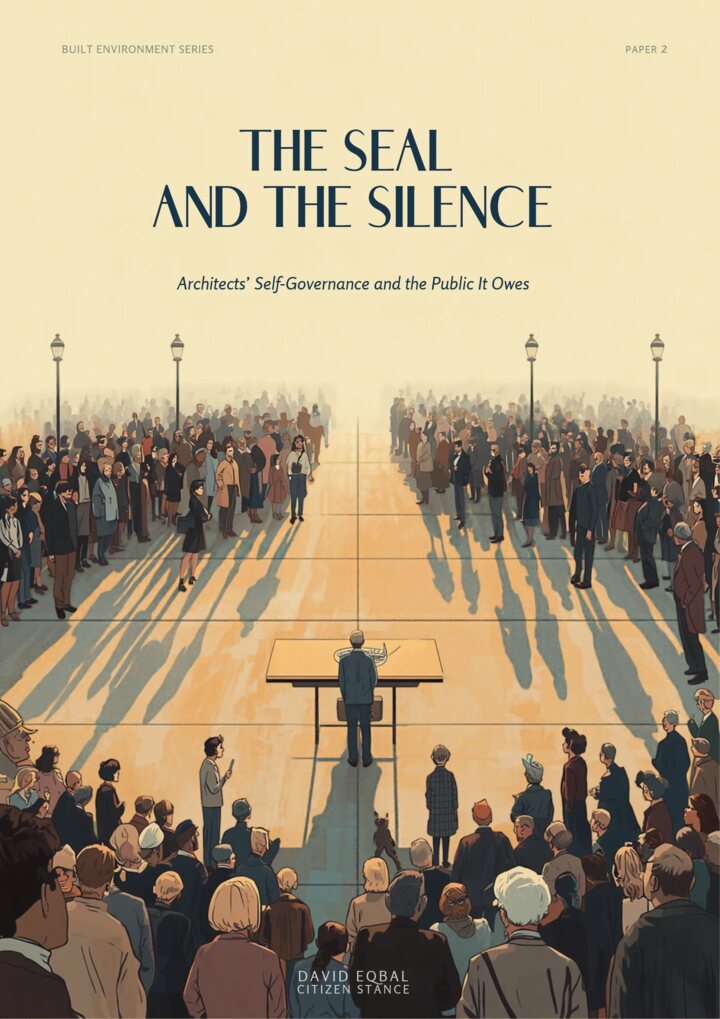
The Seal and the Silence
Architects' Self-Governance and the Public It Owes
Ontario lends architects the power to govern themselves so that the public interest is served. Examining the OAA's record from 2013 to 2026, from site plan review and Bill 23 to the insurer it owns, the paper finds a body that licenses seriously but reads its public duty narrowly. It proposes four mechanisms of accountability, put to a vote of every architect.
Read the summary in plain words →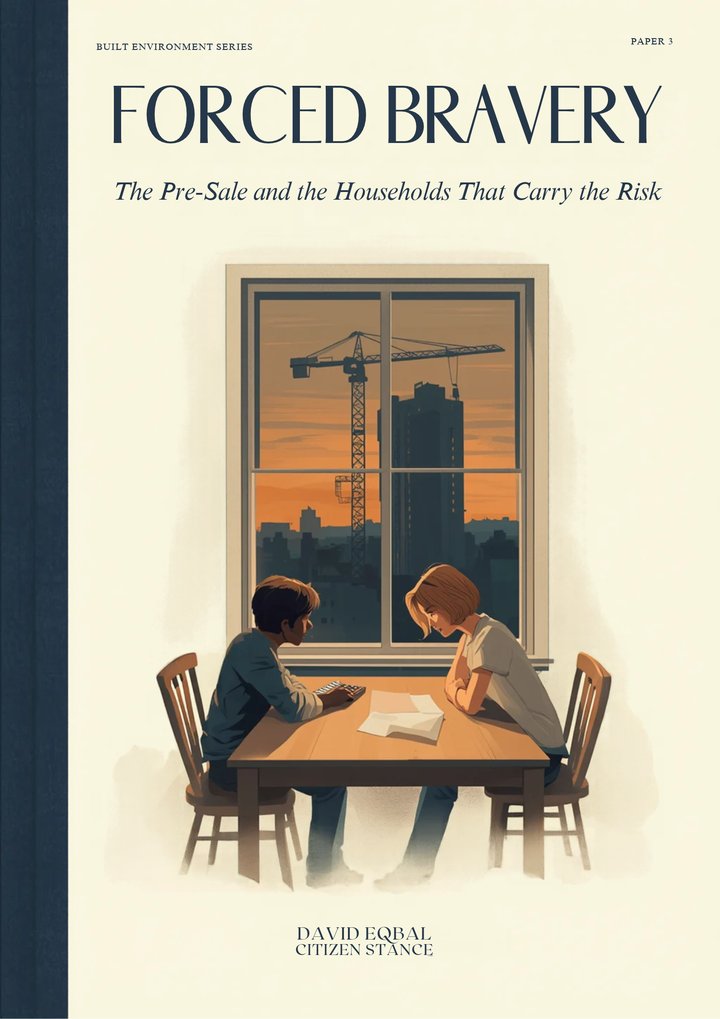
Forced Bravery
The Pre-Sale and the Households That Carry the Risk
Most new condominiums in Ontario are sold before they are built, which places five years of price risk on the buyers least able to carry it. The paper follows one household from a 2021 pre-sale to a 2026 closing, reviews the evidence on financial strain and health, and proposes resident building groups adapted from Germany's Baugemeinschaft model.
Read the summary in plain words →The Four Checks Applied
Papers and briefs that apply the four checks of Channels, Not Dams to a whole sector of Canadian life.
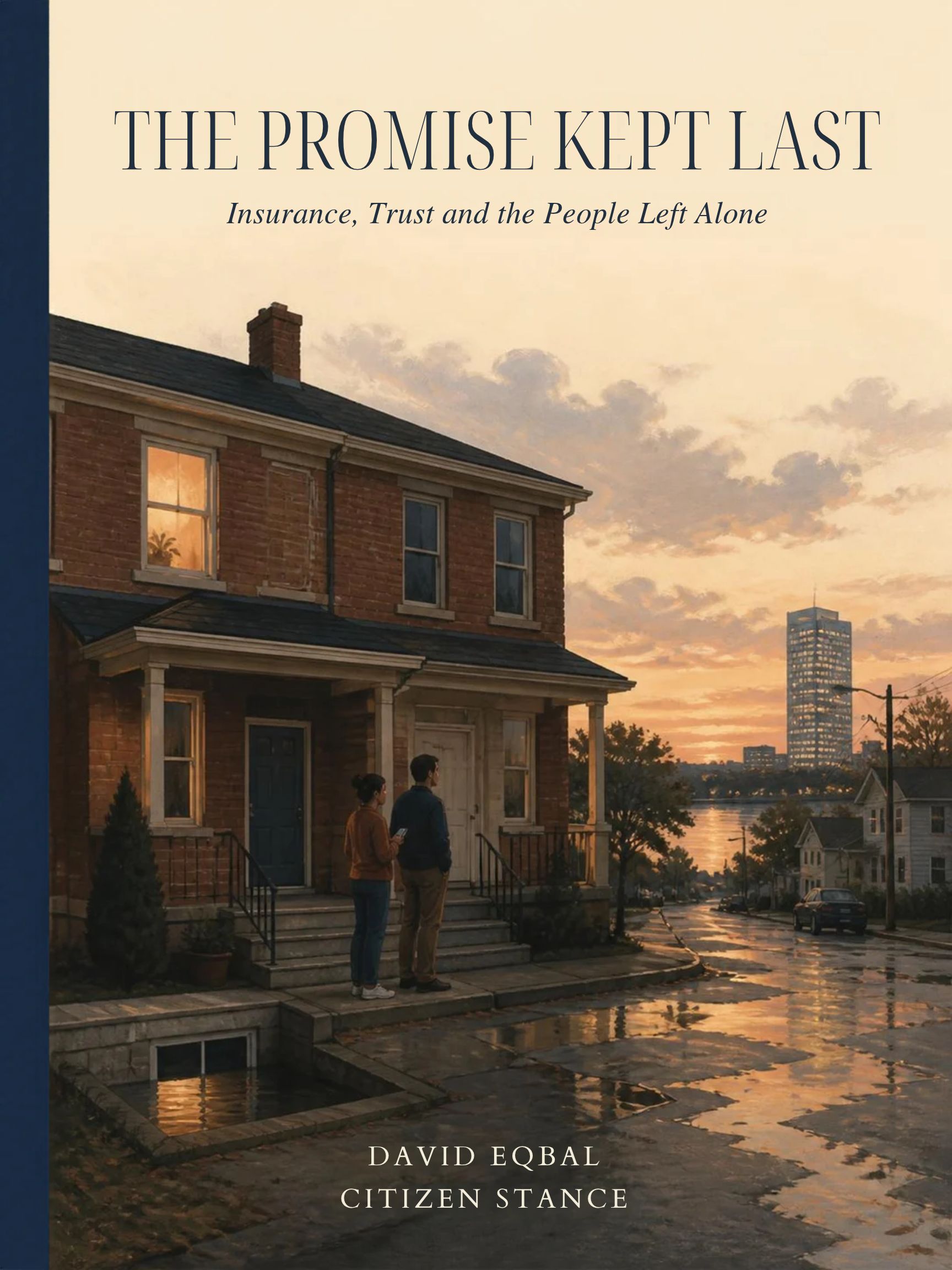
The Promise Kept Last
Insurance, Trust and the People Left Alone
Insurance is a promise tested once, at the moment a household is weakest, and in Canada that test is decided by the party that pays. Applying the four checks to property, life, health and disability insurance, the paper finds that solvency is well supervised but the claim is not, and proposes binding, arm's-length review for claimants and a Canadian Insurance Trust.
Read the summary in plain words →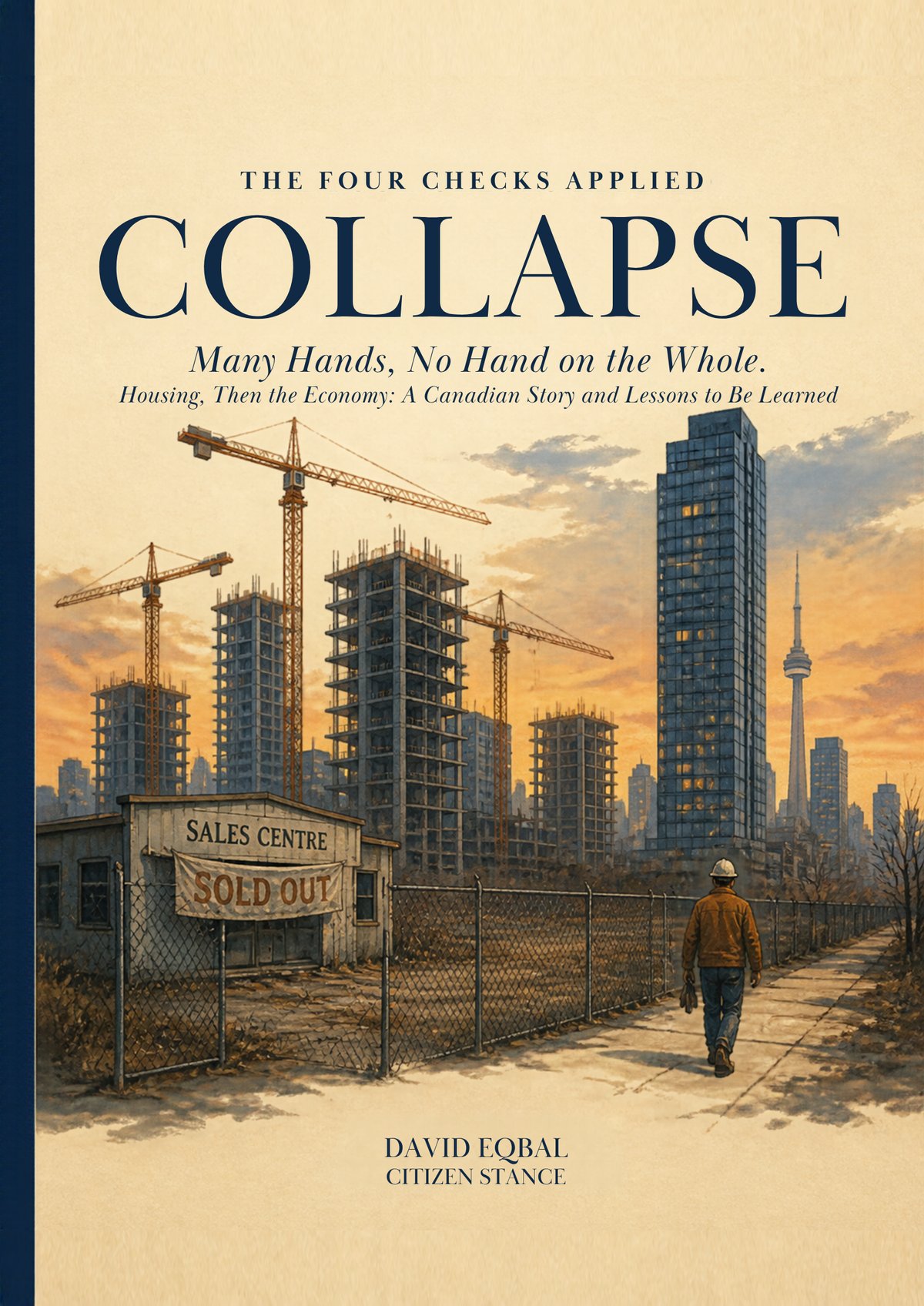
Collapse
Many Hands, No Hand on the Whole. Housing, Then the Economy: A Canadian Story and Lessons to Be Learned
In 2025 the Toronto region recorded its fewest new home sales in 45 years, in the middle of a housing shortage. The paper traces the collapse to seven levers, from interest rates and immigration to development charges and the pre-sale, each pulled by a different institution, and proposes an independent Impact Guidance Office to assess their combined effect before decisions are made.
Read the summary in plain words →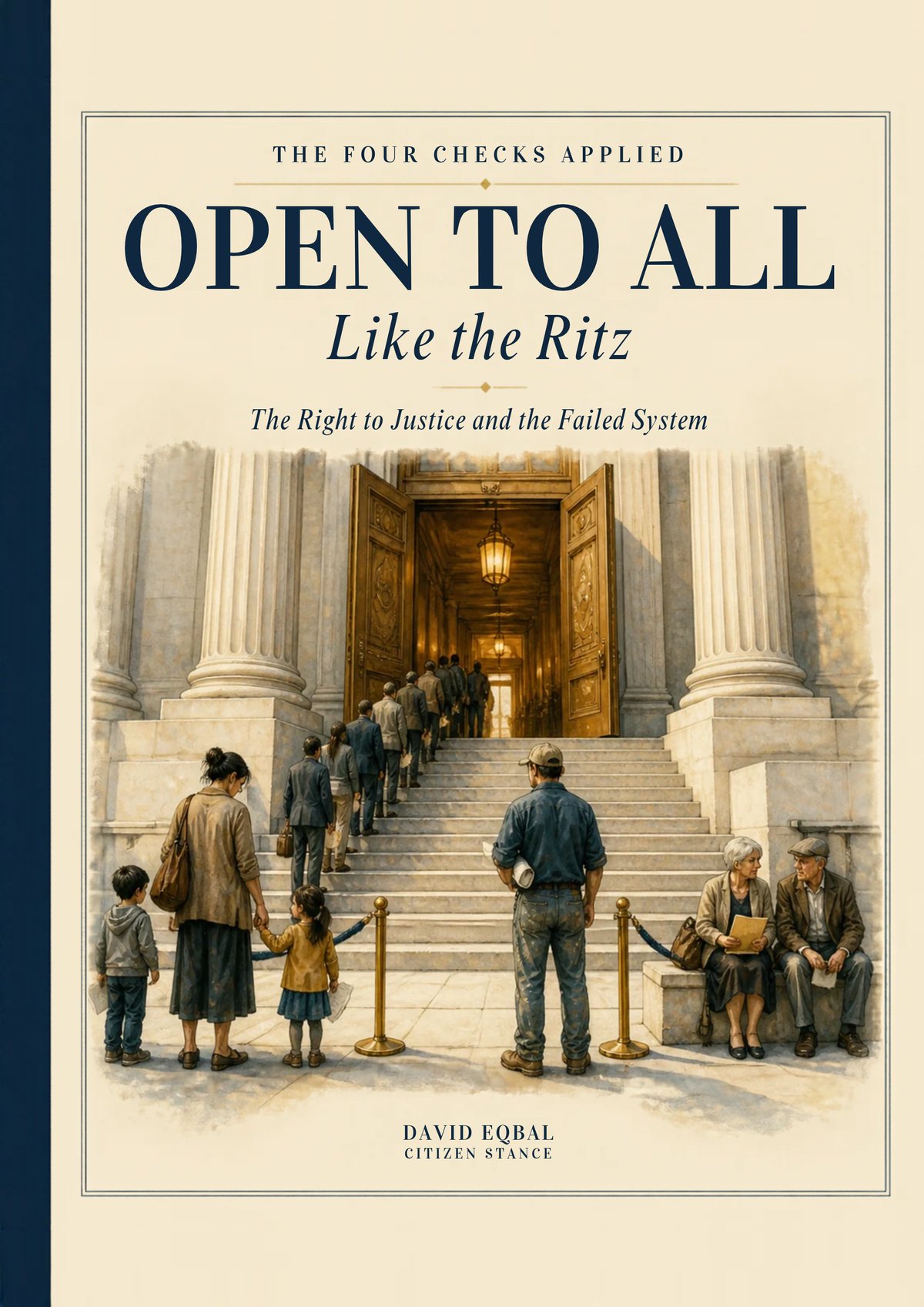
Open to All, Like the Ritz
The Right to Justice and the Failed System
Canada's courts are open to everyone, the way the Ritz is: the door is open, but few can afford to walk in. Testing the belief that the system is built to enrich lawyers, the paper finds it wrong about motive and right about effect, and proposes an Access to Justice Act, an independent Justice Access Office and a public seat on the rules committees.
Read the summary in plain words →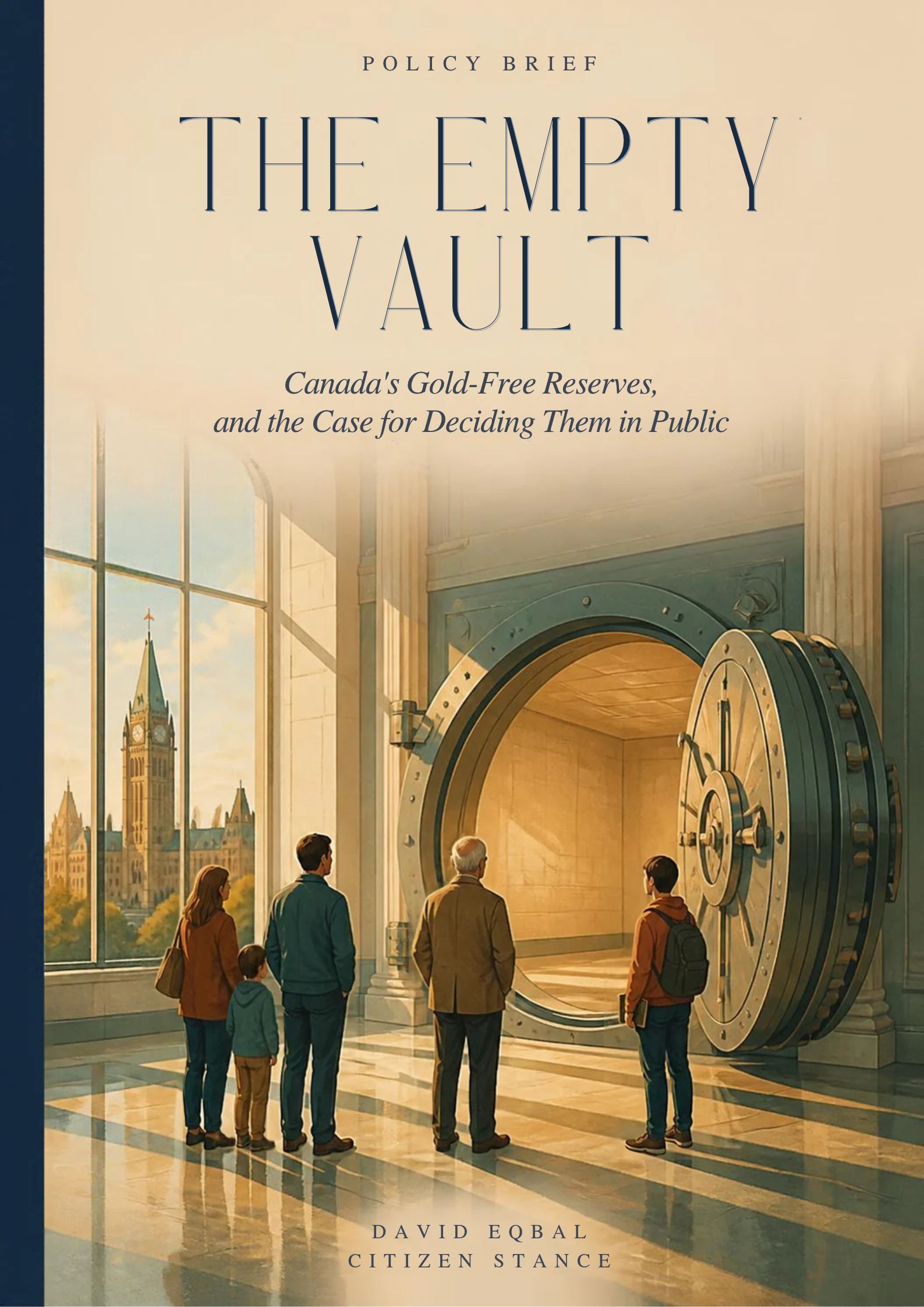
The Empty Vault
Canada's Gold-Free Reserves, and the Case for Deciding Them in Public
Canada is the only G7 country that holds no gold in its official reserves. The brief does not argue that Canada should buy gold; it argues that the choice has never been examined or decided in public, and it applies the four checks of Channels, Not Dams to that decision. The OSF project adds open research questions for students.
Read the summary in plain words →Policy Proposals
Stand-alone policy work on housing a generation priced out.
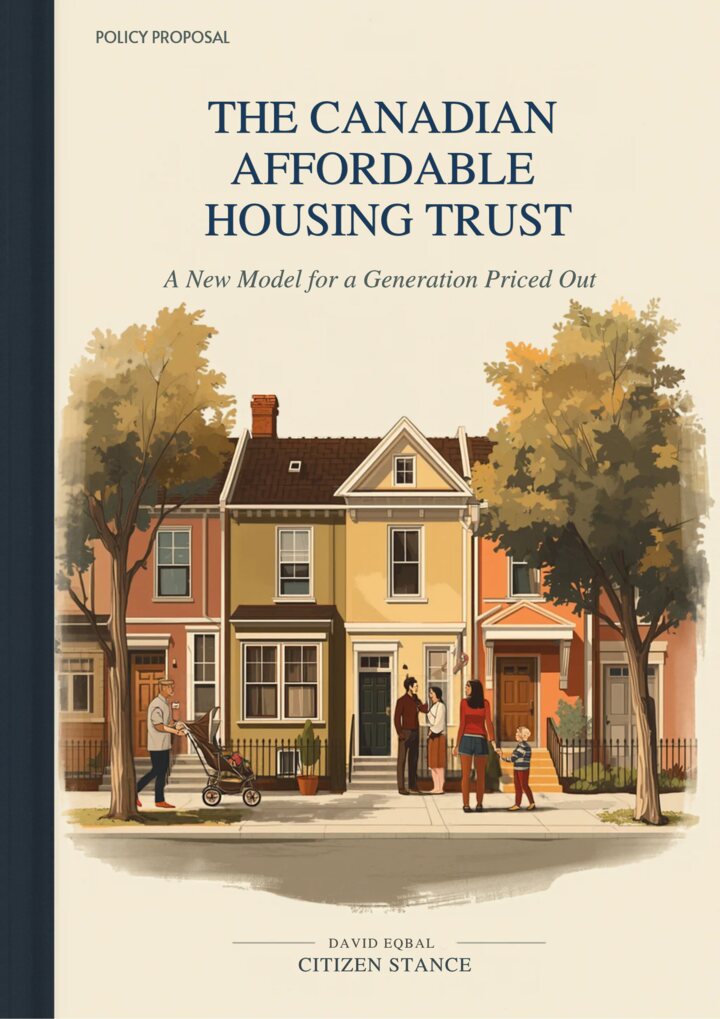
The Canadian Affordable Housing Trust
A New Model for a Generation Priced Out. Model 1: CAHT builds. Model 2: residents build, CAHT enables.
A federally chartered non-profit that builds on Crown land, sells homes at cost to income-tested households and keeps permanent rentals, financed by federally guaranteed borrowing. Model 2 helps households build their own homes together as building groups, at cost, with seed loans, a construction-loan guarantee and a pooled reserve from the Trust.
Read the summary in plain words →